Project Management
Effective project leadership is not just about tools, timelines, or execution—it’s about how decisions are made, tradeoffs are judged, and complexity is navigated in real time. This page focuses on the psychology and science behind high-quality project judgment: how project leaders think under pressure, align diverse stakeholders, interpret risk, and adapt when plans collide with reality.
The emphasis is on higher-order thinking, systems awareness, and decision-making under uncertainty—along with the communication, ethical reasoning, and sensemaking skills required to lead cross-functional work where outcomes matter and misalignment carries real cost.
Untapped
Untapped focuses on the thinking beneath project leadership—how judgment is formed, how attention is directed, and how decisions are made when complexity, pressure, and uncertainty are unavoidable. Rather than tools or techniques, the session develops higher-order thinking skills that shape how project leaders interpret risk, adapt to change, and navigate competing priorities. Participants learn practical cognitive strategies and habits that strengthen judgment, flexibility, and decision quality—sharpening the ability to see patterns, anticipate problems, and recognize insights that others miss.
"It's not what you look at that matters, it's what you see."
Henry David Thoreau
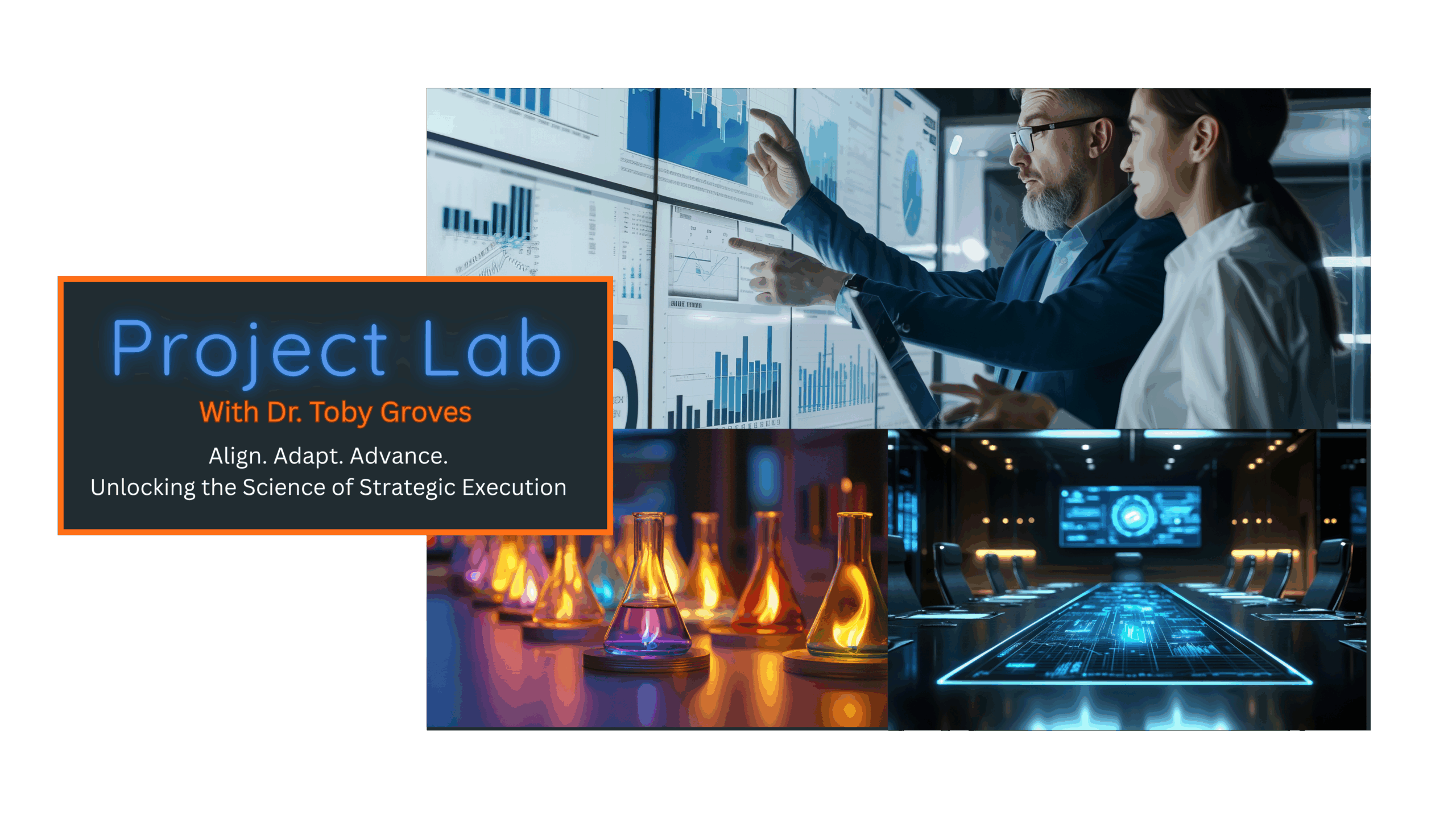
Project Lab
Project Lab is an immersive, psychology-driven experience focused on how project leaders actually think and decide in complex, real-world conditions. Rather than tools or templates, the emphasis is on judgment: interpreting risk, navigating tradeoffs, aligning stakeholders, and adapting when plans collide with reality. Through hands-on exercises and live experiments, participants sharpen the thinking that drives execution—where small decisions compound and outcomes are shaped in real time.
Reading the Organization
This session introduces a powerful way to read what’s really happening inside an organization. Using the framework of the organization as a social immune system, participants learn how hidden signals—communication patterns, unspoken norms, and subtle behavioral shifts—reveal risk, resilience, and emerging problems long before they become visible outcomes. The focus is on moving beyond surface symptoms to identify the underlying forces shaping behavior, decision-making, and organizational health.

High Stakes Communication
High-Stakes Communication examines how meaning, trust, and behavior are shaped during moments of disruption, scrutiny, and crisis. When uncertainty is high, communication becomes a matter of judgment—knowing when to speak, when to wait, how to frame information, and how timing influences understanding and response. This session treats communication as a cognitive and social process, exploring how stress, power dynamics, and context affect how messages are interpreted by employees, stakeholders, and the public. Drawing on psychology and real-world crisis contexts, it focuses on de-escalation, questioning, and stabilizing communication—equipping leaders to preserve trust and clarity when systems are under pressure.

Judgment in the Age of AI
This session examines how artificial intelligence is changing not just how decisions are made, but how judgment itself is formed. As AI increasingly delivers rapid conclusions, leaders must recognize where human thinking becomes passive, overconfident, or misaligned with context. This program introduces the concept of augmented judgment—the deliberate integration of human insight with machine output—to help decision-makers frame better questions, detect hidden risks, and retain responsibility for outcomes in environments shaped by speed, complexity, and uncertainty.

The New Psychology of Professional Skepticism
The world has changed—and so must our approach to professional skepticism. This transformative session introduces a dynamic new model of skeptical reasoning designed to meet the demands of today’s complex environments. Moving beyond outdated, mechanical checklists and superficial doubt, this program reveals the hidden psychological and contextual forces that influence judgment and decision-making.
Participants will explore the three dimensions of skepticism and how to tune their thinking to better match the reliability of evidence, situational cues, and organizational culture. Through powerful demonstrations and interactive exercises, attendees will discover how to adapt their approach, surface hidden assumptions, and improve the accuracy of skeptical judgments in real-world settings.
Whether you’re an auditor, analyst, executive, or policy advisor, this session will help you reframe what it means to think critically and skeptically—and elevate your professional impact.
"It is the mark of an educated mind to be able to entertain a thought without accepting it"
Aristotle
What attendees say

What event organizers say
We have more data than ever, but what is it really telling us? New technologies and analytical methods detect myriad patterns in our data, but what do they really mean and what decisions can they help us make? Is the underlying data reliable? Is it valid for the purpose you are using it? Cognitive technologies distance us from the context of our data, shrouding the meaning behind the patterns and how to apply the information for effective decision-making. New thinking approaches are required to move beyond simple recognition of correlations to insight into why relationships exist. This session will teach methods that give us the ability to discern the inner character of problems, to recognize why interactions occur, and what decisions can be made with the information.
When the Facts Aren’t Enough: The Art of Communicating Complex Information
Mastering the art of translating complex information into influential insights is a skill that transcends mere data analysis—it’s about crafting narratives that resonate and motivate. Our session, ‘When the Facts Aren’t Enough,’ focuses on the nuanced art of making intricate data accessible and compelling, even to those unfamiliar with the subject matter. This expertise signifies not just an in-depth comprehension of the data but a profound insight into its real-world implications and how it’s perceived by diverse audiences. By adopting the perspectives of your listeners and embodying their experiences, this interactive workshop delves into the cognitive strategies and thinking paradigms essential for clear, impactful communication. Participants will emerge with enhanced abilities to convey their knowledge persuasively, ensuring their messages are not just heard but felt and acted upon
The Science of Great Leadership
Leadership skills have never been more important, in all industries and at all levels, whether executive or front-line employees. Organizations succeed in meaningful ways when their individual members have the ability to inspire action, build trust, solve complex problems, coordinate effective teams, and resolve contentious conflicts without damaging important relationships. This requires a deep understanding of human motivation, emotional intelligence, and nuances of cultural psychology. This session teaches a powerful model that allows attendees to build their own core leadership skills as well as the psychology of performance and motivation and the social psychology of organizational behavior.
The Science of Organizational Culture and Decision-Making
Equity and diversity across neurodiversity, racial and ethnic backgrounds, cultures, and ages enrich social networks, fostering deep learning, flexible thinking, and long-term organizational health and wellness. Diverse teams, embracing a spectrum of perspectives, achieve higher satisfaction, superior decision-making, and elevated performance. Discover the science that enhances social networks and learn to embed social standards and norms promoting equity and inclusivity. Master strategies for building a culture that encourages personal responsibility in shaping group norms and attitudes essential for embracing a broad spectrum of diversity, driving collective success.